Latching relays are a type of electromagnetic relay that are widely used in various electrical and electronic systems due to their unique ability to retain their state even after the power is switched off. Unlike conventional relays, which return to their default position when power is lost, latching relays remain in their last switched position until an external signal triggers a change. This characteristic makes them highly efficient, particularly in applications where power consumption and system stability are critical. In this article, we will explore the working principles, benefits, and common applications of latching relays.
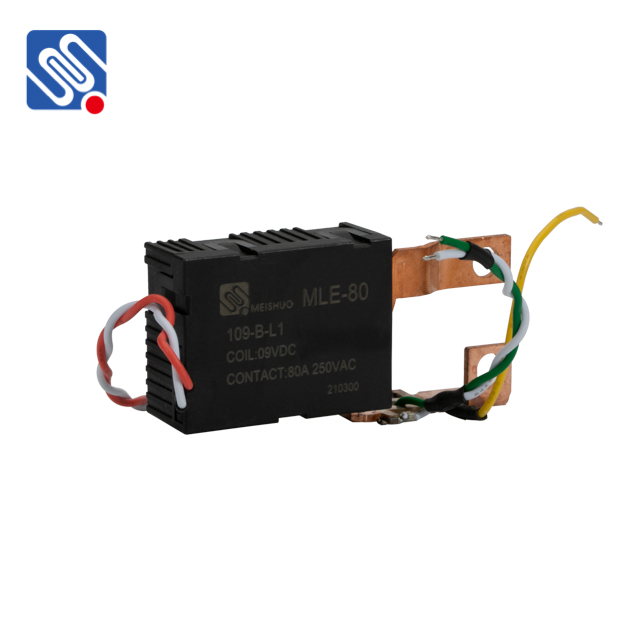
What is a Latching Relay? A latching relay, also known as a bistable relay, has two stable positions: one for “on” and one for “off.” Once the relay is energized and switches to one position, it stays there until it is re-energized to switch to the other position. This operation is different from regular relays that need continuous power to maintain their state. The key advantage of latching relays is that they do not consume energy to stay in the activated or deactivated position, thus saving power. Working Principle The working principle of a latching relay is based on a mechanism that “latches” or “locks” the relay’s contacts in either the open or closed state without requiring a constant supply of electricity. The relay consists of a coil, a set of contacts, and a mechanical latch. When a pulse of current is sent to the coil, it causes the relay to switch to one of its two stable states. The relay remains in that state until the opposite pulse is applied, which then triggers the relay to switch to the other state. This process is highly efficient because, once the relay is latched, no further power is needed to keep the contacts in their current position.