Relay circuits are a fundamental component in the world of electrical engineering, acting as essential interfaces between low-power control circuits and high-power devices. The versatility and reliability of relay circuits have made them indispensable in various applications—from household appliances to complex industrial systems. This article provides an in-depth look at relay circuits, exploring their operation, design components, applications, and advantages.
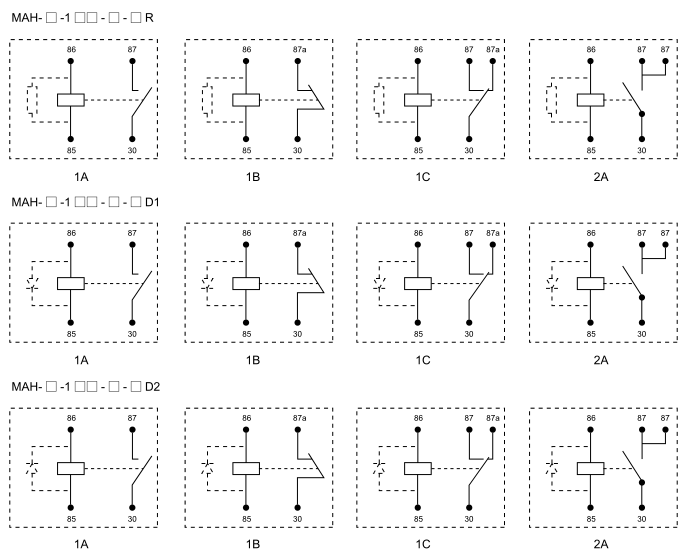
What is a Relay? At its core, a relay is an electromagnetic switch that allows a low-power signal to control a higher-power circuit. It typically consists of a coil, an armature, and a series of contacts. When an electric current passes through the coil, it generates a magnetic field that pulls the armature, either closing or opening the contacts to complete or break the circuit path. The simplicity of this operation has made relay circuits a staple in electrical design. Components of a Relay Circuit A typical relay circuit comprises several essential components: Relay: The heart of the circuit. It usually contains an electromagnet (the coil) and one or more sets of contacts. Contacts can be classified into normally open (NO) and normally closed (NC) types. NO contacts are open when the relay is de-energized and close when it is energized, while NC contacts are the opposite.