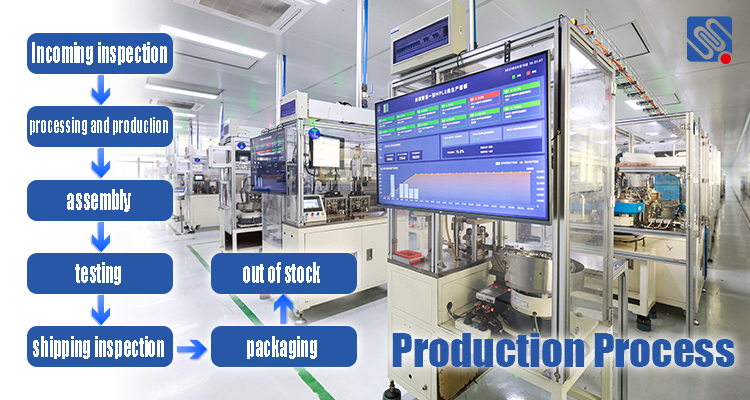
Relay production plays a crucial role in modern electrical systems, providing the necessary control for high-current circuits through low-power electrical signals. Widely used in a variety of industries, including automation, telecommunications, automotive, and power distribution, relays serve as key components in numerous applications. This article will explore the comprehensive process of relay production, from design to assembly and testing, highlighting the challenges involved and the importance of quality control.
1. Design and Engineering of Relays The first step in the production of a relay is its design. Engineers and designers must take into account various factors such as the relay’s application, electrical requirements, and environmental conditions. This process involves selecting the materials for the components, defining the relay’s switching capacity, and ensuring that it meets the necessary safety and operational standards. The most critical aspect of relay design is the relay’s electrical characteristics, which include its voltage and current ratings, contact configuration, and switching time. The design process also involves detailed simulations to test the relay’s behavior under different operating conditions. Computer-aided design (CAD) tools are often employed to create precise drawings and models for the components, ensuring that each part fits correctly and works as expected.