Industrial control relays play a critical role in the backbone of modern industrial automation systems. These compact electrical devices are widely used for switching and controlling electrical circuits in manufacturing plants, power stations, and a variety of other industrial applications. Their primary function is to control the operation of machines, motors, and other electrical equipment by enabling or disabling the power flow as needed. In this article, we will explore the workings, types, applications, and benefits of industrial control relays, highlighting why they are indispensable in today’s industrial environment.
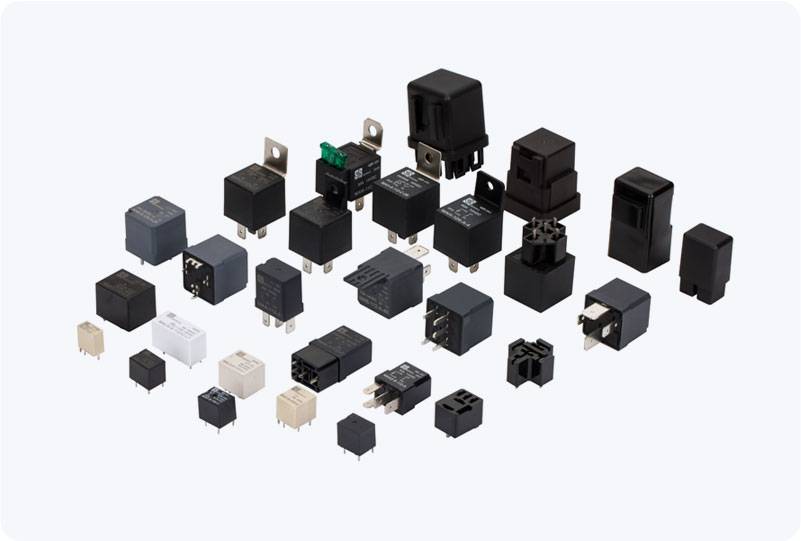
What is an Industrial Control Relay? An industrial control relay is an electrically operated switch that controls a circuit’s state based on an input signal. When a signal is applied, the relay activates its internal components, such as contacts or semiconductor devices, to open or close a circuit. In this way, relays act as intermediaries in controlling heavy-duty equipment using low-power control signals. By using relays, operators can easily manage electrical equipment remotely or programmatically, offering both flexibility and safety. How Does an Industrial Control Relay Work?
At its core, the relay consists of an electromagnet, a set of contacts, and a spring mechanism. When a control voltage is applied to the electromagnet, it generates a magnetic field that pulls or pushes a movable armature. This movement opens or closes the relay contacts, effectively changing the circuit’s state. The contacts can either be normally open (NO) or normally closed (NC), depending on the relay type.