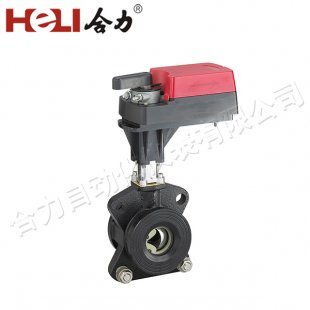
In recent years, there has been an increasing focus on sustainable and efficient technologies in various sectors, particularly in the realm of motion control systems. Among these advancements, theHydrogen Energy Damper Actuatoremerges as a revolutionary solution that promises not only to enhance performance but also to contribute to environmental sustainability. This article explores the functionality, applications, and benefits of hydrogen energy damper actuators, illustrating their potential to reshape various industries.
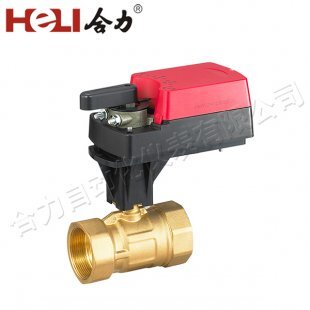
Understanding Hydrogen Energy Damper Actuators
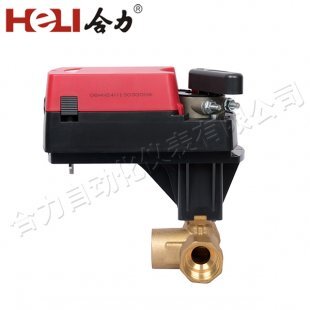
Hydrogen energy damper actuators utilize hydrogen as a primary energy source to generate motion and control systems. At its core, a damper actuator is designed to absorb and dissipate kinetic energy in a controlled manner, typically found in automotive, aerospace, and industrial applications. The integration of hydrogen energy into these actuators marks a significant evolution in their design and functionality. Mechanism of Action The operation of a hydrogen energy damper actuator can be broken down into several key components. It typically consists of a hydrogen fuel cell, a mechanical damper system, and an electronic control unit. The fuel cell converts hydrogen gas into electrical energy through a chemical reaction, producing water as a byproduct. This electrical energy powers the actuator, enabling it to adjust and control the movement of mechanical systems.